

Stressed Mums
Stressed mums are at an all time high throughout the world, and we gotta do something about it!
We can’t continue like this. Stressed mums becoming the norm.
Here in this post I aim to give you some helpful, science backed advice to deal with chronic stress, so that you can take charge of your mental health, lower your heart rate & blood pressure, and reduce those cortisol levels.
Stressed To The Max
Are you struggling to keep on top of everything? From your to do list to your family’s demands, a job, a less than full-time social life, parents and other bits in between?
No matter how carefully you plan and prioritise, you still experience even higher levels of stress and erratic emotional states. What are you doing wrong?
In one word. Nothing.
You’re not doing anything wrong. It’s called the 21st century. Welcome to “mommy burnout”.
What you must do is not stay stressed, which will only cause endless depressive symptoms if it continues (sorry to bring in a downer here) Instead, take control and reduce stress RIGHT NOW for the sake of your body’s health, and your mind.
Significant stress is a leading contributor of cancer, heart disease, and suicide, among other nasty things. So there’s no time to waste.
Statistics teach us that stress is not felt the same in everyone.
Environmental factors, struggles with child care and major traumatic life events can all trigger an episode of stress, yet all are different in terms of the levels of stress caused and the symptoms that follow.
If you’re reading this and your stress levels are at an all time high, know you’re not alone and you can get help.
In 2020, 9.8 million American mothers suffered from burnout (aka chronic stress). In the UK, the figure for mothers is they’re 40% more stressed than everyone else, according to a study outlined by the Guardian.
Let’s dive in and discuss how to reduce your stress levels, thus bringing you back to more important tasks, such as enjoying quality time with your loved ones (stress free, of course)
Physical Activity & Exercise
I know, I know, you’re resisting it already.
But exercise really is number one for resetting the body after stressful events. Exercise beats any kind of stress hands down.
A fantastic resource on explaining this is a book called Burnout: Solve Your Stress Cycle.
In it, authors Emily and Amelia Nagoski share how, if we don’t complete the stress cycle through exercise and then calming down afterwards, the stress cycle never stops.

Those tight shoulders and constantly feeling like you’re on high alert? Exercise can get rid of that.
Stress is an ancient form of fight or flight, so in our ancestors era we’d be chased by a huge tiger or an aggressive human stealing our food.
Our sympathetic nervous system would kick in, flooding the body with cortisol, and we’d run, FAST. Or, we’d fight, depending on the situation.
If we didn’t get eaten (or beaten), our stress levels would reduce naturally knowing we were no longer in danger. This is normal stress.
Nowadays, we are dealing with one stressful situation, followed by another endlessly in short succession.
Not so much of a hugely stressful situation as being eaten by a tiger mind you, but multiple small triggers build up to something big in the long run. And this is because the stress cycle never ends!
Therefore, by exercising, you close one stress cycle. You break the cycle as it were. If another one comes along (and it will) you take yourself off for another walk/run and feel the relief.
Exercise is great if you’re looking to improve your work-life balance as it can become a nice hobby once you find something you enjoy doing.
Try out different exercises, such as cardiovascular (running, walking, swimming) and muscle toning exercises (yoga, weights).
Exercise is also good for regulating hormone levels which in turn will help reduce stress in the body.
Gratitude Journaling
We hear a lot about gratitude these days, simply because it’s powerful and beautiful simultaneously. And it puts us in a different mental state after we’ve practised being grateful.
It’s a way to bring us back to this moment only. To what truly matters and to what we value most.
When we practice gratitude, we come from a place of compassion and love, rather than fear and negativity.

A simple way to practise gratitude is to write a daily gratitude list. This way you build up on the good stuff. Pick three things that you’re grateful for every day.
And write them down every day. It can be the little things or big things. It’s your gratitude list.
I’m particularly in love with this gratitude journal which comes with journal prompts too. I also cover gratitude practise in my ebook-take a look here!
Reduce Social Media
Social media is often a cause of stress without realising it.
For the simple fact that social media initiates FOMO (fear of missing out) by its eternal “my life is so great” vibe (you know what I’m talking about, filters, smiles, poses etc)
Therefore, bite the bullet and control how much time you spend browsing it. In other words, don’t spend a half day browsing, limit it to 5-10 mins every so often.
Or why not try and go tee total for a weekend and get off it completely? I’ll bet anything you feel less stressed.
Forgive Yourself
Your stress is not a reason to be hard on yourself. Instead, it’s a reason to build compassion, self worth and respect for yourself.
Having small children, unexpected weight gain, multiple physical symptoms and any other stress triggers with no idea how to help yourself is really not a reason to punish yourself with negative talk.
Tell yourself kindly but firmly, “I’m doing my best, I’m here right now and I’m OK. I know these feelings aren’t trying to hurt me”.
Be With the Little Things Which End Up Being BIG things
The gorgeous smile of your little one. The warm cuppa in your hands. The homemade cookies. The warmth of your house in winter.
Whatever little thing you can be mindful brings tremendous peace and presence to your day and reduces stress.
Rather than focusing on your to-do list, or the chores, or the workload, or whatever else is happening which feels too big to handle, focus more on the small things.
Bring in some quiet time to your schedule, on the evenings when the family are asleep at a decent time.
It ’ll calm you down and bring you to a place where you feel you can tackle the big things (if they need tackling that is!)

Stay Outdoors For Longer
Move. Walk, cycle. Fresh air. Have a good time outdoors whatever you’re doing. Enjoy a day out somwhere nice. Even in lockdown, we’re allowed out and about for exercise.
Spend your entire day outside if you can and your stress levels will naturally lower, bringing the cortisol down with it.
Eat Healthier Foods
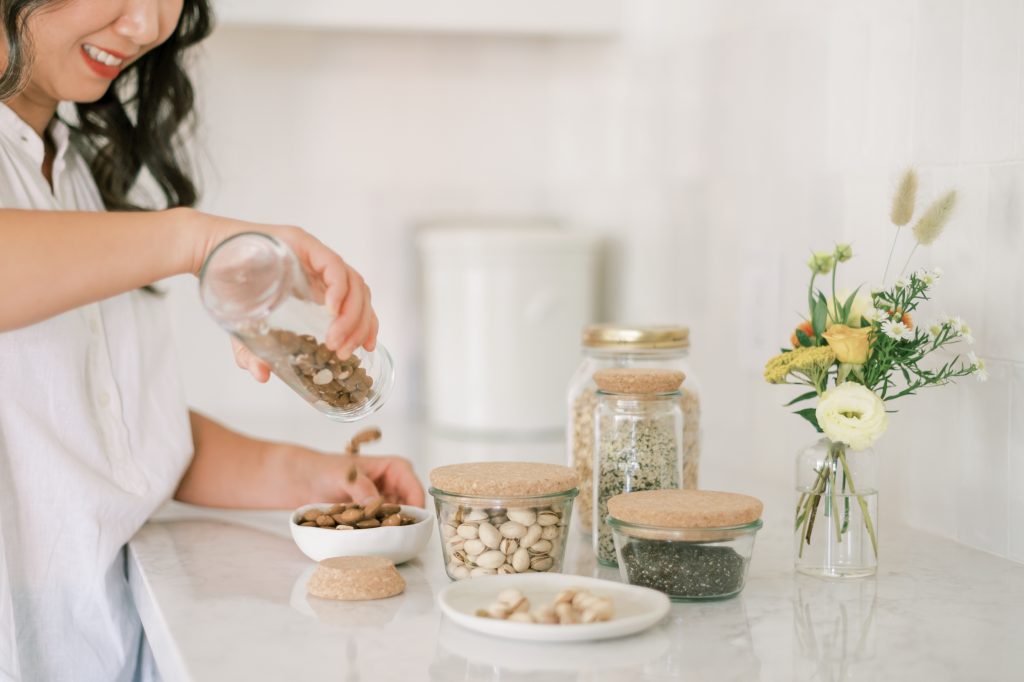
My favourites are oats, blueberries, chamomile tea and dark chocolate for calming the body. And mind how you eat too. By slowing down at dinner time for example, you’ll help calm down the stress in your body. And help your digestion along. Win win!
Breathe Better
We don’t breathe right most of the time. Shallow chest breaths and a sedentary lifestyle mean we don’t get the ideal level of oxygen into our blood stream.
Deep abdominal breathing is fantastic to reduce stress. It wakes you up way better than coffee!
With abdominal breaths, you take a deeper inhale so your abdomen puffs out, and then breathe it all out by contracting your tummy muscles.
It takes a bit of practice, but it’s worth it to get the hang of it.
Try out some essential oils to help the room you’re breathing in smell nicer.
A burner with a few drops of oil, or a hot bath with some essential oils, works wonders to reduce stress.
Good Night’s Sleep
Stress tends to mean poor sleep, but it’s important to prioritize getting more hours if you can.
If you’re not getting the zzzzz you need, get some advice from a medical professional or search online for good sleep solutions.
My personal favourite suggestions are this spray for your pillow and the Calm app to listen to while falling asleep.

Stressed Mums FAQs
Burnout is where you feel you can’t cope with the demands put on you, or the demands you put on yourself. It’s a significant form of overwhelm and affects millions of mothers around the world. Chronic levels of stress can lead to burnout, so it’s important to tackle your stress using the tips in this post to help you and guidance from your healthcare provider.
The simple answer is that many mums are juggling lots of responsibilities and demands on their time – often unsupported – and it’s too much to handle. By taking time out when she can, reducing levels of stress and giving some time to herself, she should improve how she feels.
It can be yes, if the demands become too much. This is why it’s important to tackle stress when it hits and reduce it, so that she can parent better and feel better in herself.
References:
Megan Leonhart, 2020, 9.8 million working mothers in the U.S. are suffering from burnout, Make It, accessed 25.11.21, https://www.cnbc.com/2020/12/03/millions-of-working-mothers-in-the-us-are-suffering-from-burnout.html
Mohd. Razali Saklleh, 2008, Life Event, Stress and Illness, accessed 25.11.21, https://www.ncbi.nlm.nih.gov/pmc/articles/PMC3341916/
Jamie Doward, 2019, Working mothers ‘up to 40% more stressed’, accessed 25.11.21, https://www.theguardian.com/money/2019/jan/27/working-mothers-more-stressed-health
Post contains affiliate links – any purchases you make are unaffected, but I may receive a small commission. (see my disclaimer).